New York · 2026 Allergen Labeling Law
New York's New Allergen Labeling Law: Is Your Business Ready?
Since November 12, 2026, covered New York food businesses have been required to disclose major allergens on qualifying foods prepared, prepackaged, and offered or sold on the same premises. Find out which products may be affected, what the labels must show, and how to keep allergen information accurate when ingredients change.

The requirement
What New York's Prepackaged Food Allergen Law Requires
The requirement applies to qualifying food prepared, prepackaged, and offered or sold to customers on the same premises. Covered establishments must place a written notification of applicable major allergens on the package or on a label attached to it.
Who
Covered New York food establishments, including certain food-service operators and retail food stores.
What
Written identification of major allergens in qualifying prepackaged products, on the package or an attached label.
When
Effective November 12, 2026. Now in effect.
New York's requirements appear in Public Health Law §1357 and Agriculture & Markets Law §199-g. The second provision expressly covers retail food stores. Whether a particular item is covered depends on the statutory definitions and how it is prepared, packaged, and offered or sold.
Legislative history: the law originated as Senate Bill S5381A (Assembly Bill A6558A), signed by Governor Kathy Hochul in November 2025. This is separate from New York's existing menu notice law (Public Health Law §1356).
The nine major allergen categories identified by the law
- Milk
- Eggs
- Fish
- Crustacean shellfish
- Tree nuts
- Peanuts
- Wheat
- Soybeans
- Sesame
Does This Apply to Your Products?
The key distinction is when food is packaged and whether the preparation, packaging, and sale or offer occur on the same premises.
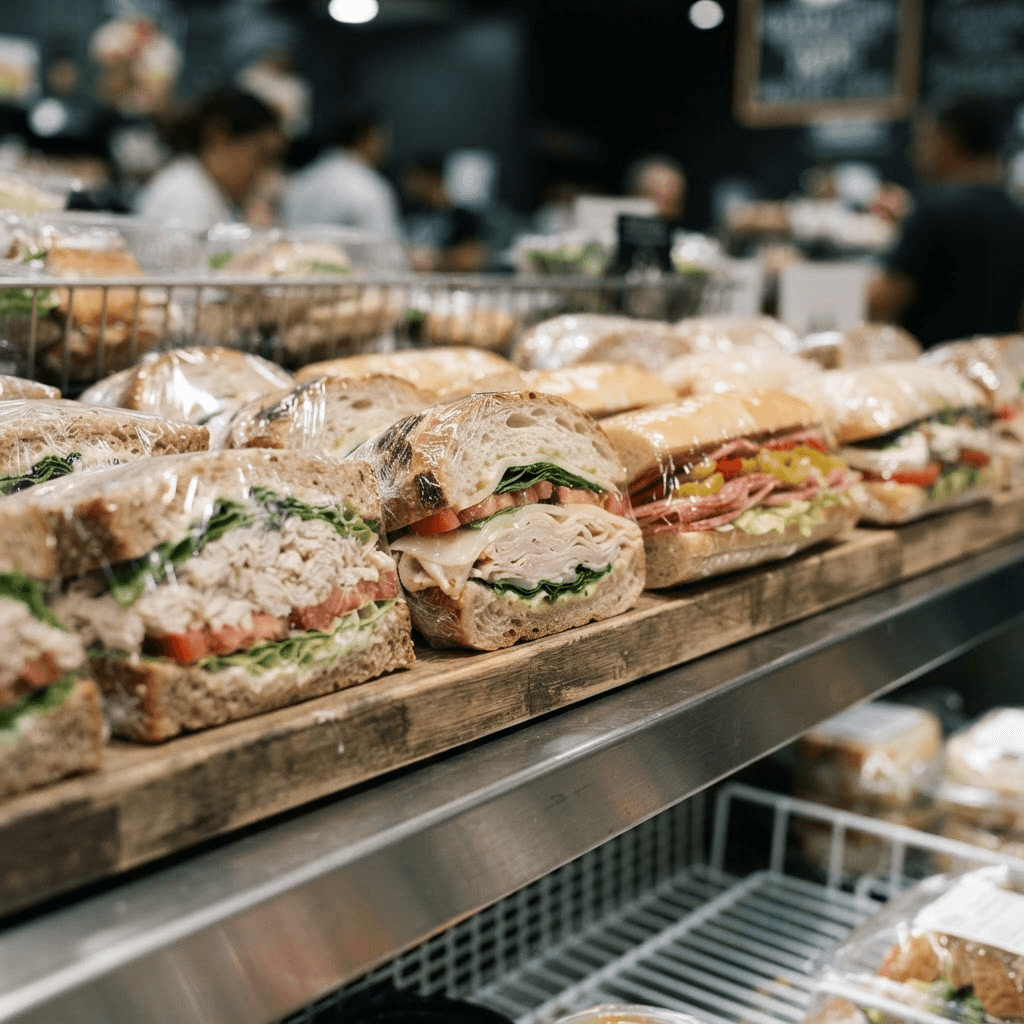
Packaged Before the Customer Orders
Example: a sandwich prepared and wrapped in-store, then placed in a grab-and-go case for customers to purchase. It may fall within the new requirement when the statutory conditions are met.

Packaged After the Customer Orders
Example: a made-to-order sandwich wrapped after a customer places an order. The new prepackaged-food definition excludes food packaged after ordering. Other labeling requirements may still apply.
Illustrative types of operations
- Delis
- Bakeries
- Sandwich shops
- Ice cream parlors
- Cafeterias
- Food trucks
- Retail food stores with prepared-food operations
The business category alone does not determine whether every product is covered; the product and packaging workflow matter.
Is your workflow compliant?
30-second check
Are you affected by New York's new label law?
Do you package any food before customers order it?
For example: wrapped sandwiches in a case, boxed pastries, pre-packed pints or salad cups.
Is that food prepared, packaged and sold at the same location?
What kind of business is it?
Optional
Your answer shows here
Pick an answer to question 1 to see where you stand.
Not sure whether your products qualify?
Take the 2-minute assessmentWhat the Label Must Show
A covered product needs a written notification identifying applicable major allergen ingredients on the package itself or on a label attached to it. A digital menu by itself does not satisfy this physical-package requirement.
Turkey & Swiss Sandwich
Contains: Wheat, Milk
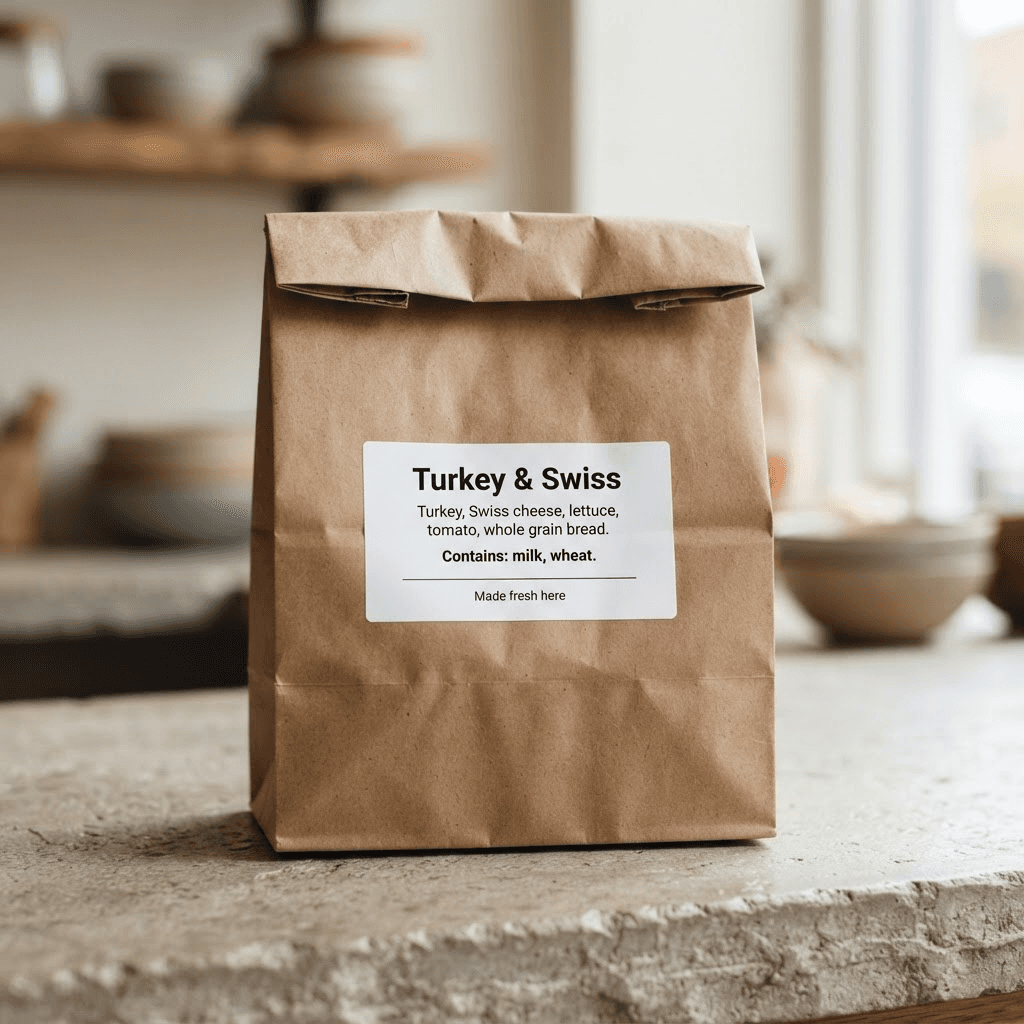
Illustrative photo.
Making a Label Is One Step. Keeping It Accurate Is the Ongoing Challenge.
A recipe changes. A supplier substitutes an ingredient. A new seasonal product reaches the shelf. Each change can affect which allergens need to be disclosed, and the team needs a clear process for updating the information behind the label.
Recipe changes
Without a central source of ingredient information
Multiple records must be checked and reconciled
With organized allergen data
Recipe and allergen information can be managed from a common source
Supplier substitutions
Without a central source of ingredient information
Teams must determine which products are affected
With organized allergen data
Ingredient-level records support a more consistent review
Multiple locations
Without a central source of ingredient information
Separate files may drift out of alignment
With organized allergen data
Shared information helps teams work from the same baseline
Label updates
Without a central source of ingredient information
Teams still need to verify and revise physical labels
With organized allergen data
Better underlying data supports the label-review process
Where Foodini helps
From Ingredients to More Reliable Allergen Information
Foodini helps food businesses organize recipe and ingredient information, identify allergens, and maintain consistent allergen data as menus change. That gives teams a stronger foundation for reviewing the information used in their labeling workflows.
Step 1: Bring ingredient data together
Centralize recipes, ingredients, and relevant supplier information.
Step 2: Identify allergens at the ingredient level
Map ingredient allergens to products so teams can review what each recipe contains.
Step 3: Review information for covered products
Use organized allergen data to support the human review of disclosure information for qualifying packaged foods.
Step 4: Manage ongoing changes
When recipes or ingredients change, keep the underlying allergen records updated and verify any affected package labels through the business's labeling process.
Recipes, ingredients and supplier information
Kept in one place
Allergens mapped to each ingredient
Ingredient-level records
Allergen information for each product
Organized data for review
Your team reviews and approves physical package labels
A separate step in your own labeling process
Foodini supports allergen information management. Physical package labeling remains a separate operational step, and Foodini's digital menu alone does not satisfy New York's requirement.
Four Steps to Get (and Stay) Compliant
Step 1: Identify qualifying products.
Inventory foods prepared and prepackaged on the premises before customers order, including grab-and-go products.
Step 2: Review recipes and ingredients.
Confirm ingredient-level allergen information for each potentially covered product, including any supplier changes that need review.
Step 3: Check your physical-label workflow.
Confirm how allergen notifications reach packages, who approves changes, and how incorrect or outdated labels are caught.
Step 4: Assign ongoing ownership.
Decide who updates ingredient records, who verifies label information, and what happens when a recipe changes.
A Stronger Source of Allergen Information Helps Teams Work With Confidence
Munster Restaurant Group reported 60% fewer staff dietary questions after adopting Foodini as a shared source of ingredient and allergen information.
Customer example relates to digital allergen information management, not New York physical-package labeling compliance.
FAQ
Frequently Asked Questions About New York's 2026 Allergen Labeling Law
Does this apply only to large restaurant chains?
The new statutory provisions do not establish a 20-location chain threshold. Applicability depends on the covered establishment and product definitions. Review the law and the specifics of your business.
Are prepackaged products sold at grocery stores included?
Agriculture & Markets Law §199-g expressly includes retail food stores within its food-establishment definition. Whether a particular product is covered still depends on how it is prepared, packaged, and offered or sold.
What if we package food only after a customer orders?
Food packaged after a customer orders is excluded from the definition of prepackaged food under these new sections. Separate legal requirements may still apply.
Which allergens are covered?
The nine major categories are milk, eggs, fish, crustacean shellfish, tree nuts, peanuts, wheat, soybeans, and sesame. The statutes also address certain protein-derived ingredients and exceptions.
Does a digital allergen menu satisfy this labeling law?
No. The statutes call for a written notification on the package or on a label attached to the package. Digital menus can help communicate allergen information, but do not replace that physical-package requirement.
Are 'may contain' cross-contact statements addressed by this law?
The new sections focus on identifying major allergens present as ingredients. Cross-contact statements can involve other regulatory and safety considerations. Review the statutory text and obtain qualified advice for your specific labeling process.
Does this replace New York's existing allergy-notice rules?
The prepackaged-food labeling provisions (Public Health Law §1357) are distinct from New York's existing menu and ordering allergy-notice rules (Public Health Law §1356). Businesses should evaluate each applicable requirement separately.
Official sources
Related Foodini resources
This page is general information, not legal advice or a guarantee of compliance. Confirm specifics against the official statutory text.
Want Help Reviewing Your Allergen Information Workflow?
Talk with Foodini about the prepackaged products you sell, how your ingredient information is managed, and what could make ongoing allergen reviews easier for your team. The conversation is free and exploratory; it is not a legal audit.